
7 Genius Lighting Hacks to Make Your Small Bedroom Look Bigger and Cozier
Small bedrooms don’t have to feel cramped or uninspiring. With strategic lighting, you can make your tiny space feel bigger, warmer, and more inviting. After working with countless urban apartments, I’ve discovered that lighting isn’t just about brightness—it’s about creating layers, depth, and mood.
Whether your bedroom is a cozy studio in New York or a compact retreat in Chicago, these 7 genius lighting hacks will help you maximize both space and comfort—without spending a fortune or tearing down walls.
- 1. Layer Your Lighting Like a Pro (The Three-Level Rule)
- 2. Embrace the Magic of Mirrors and Strategic Placement
- 3. Go Vertical with Your Lighting Fixtures
- 4. Ditch Dark Lampshades (Seriously)
- 5. Embrace Smart Bulbs for Customizable Ambiance
- 6. Light Your Closet (Yes, Really)
- 7. Create Focal Points with Accent Lighting
1. Layer Your Lighting Like a Pro (The Three-Level Rule)
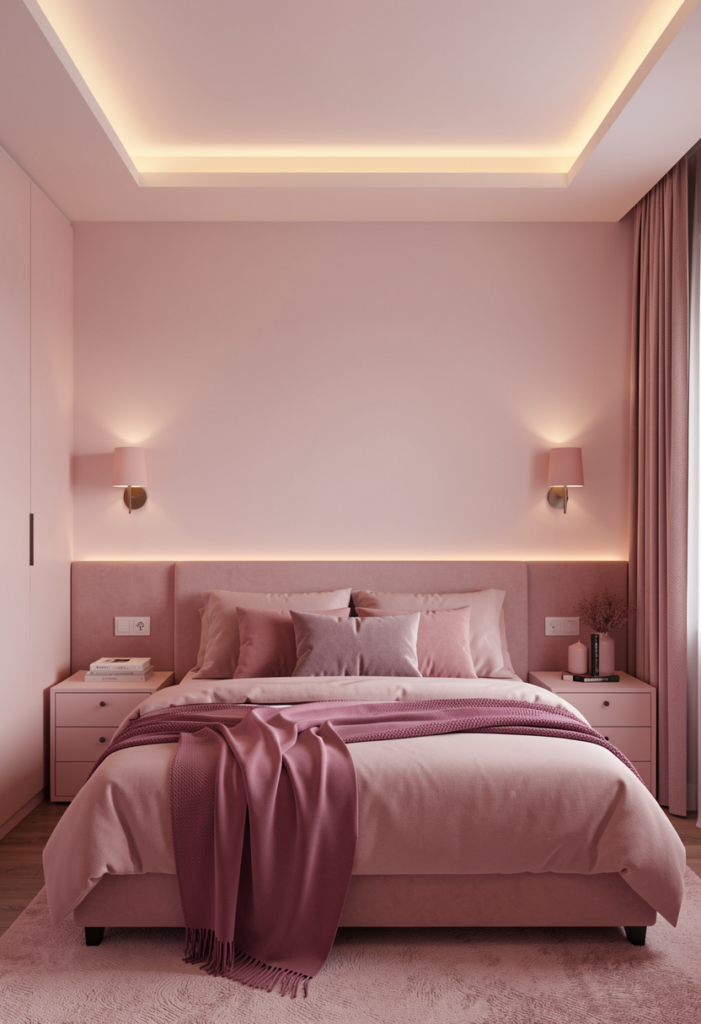
Tip:
Combine ambient, task, and accent lighting.
Most small bedrooms feel flat because they rely on a single overhead light. Start with ambient lighting, like a dimmer-controlled ceiling fixture or recessed lights. Add task lighting such as wall sconces or swing-arm lamps for reading. Finally, include accent lighting, like LED strips behind a headboard or along shelves, to create depth.
Extra: This three-level approach tricks the eye into perceiving more space while adding warmth and style.
2. Embrace the Magic of Mirrors and Strategic Placement
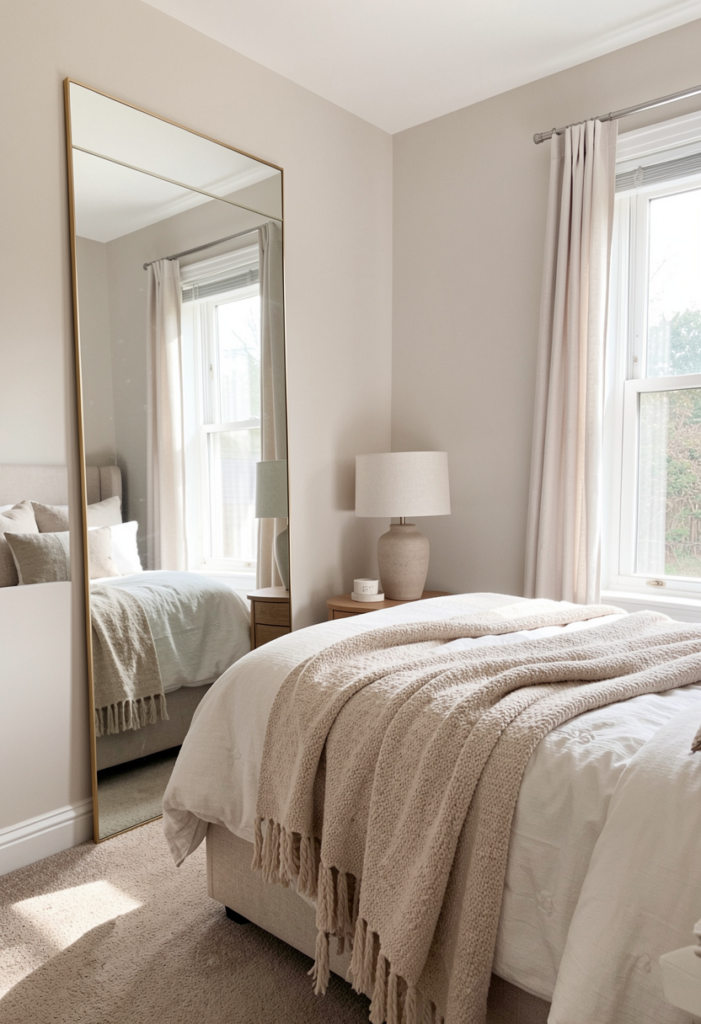
Tip:
Place mirrors to reflect natural and artificial light.
Position a large mirror opposite a window or your main lamp. This not only doubles the light in your room but also creates the illusion of a larger space. Even a small mirror strategically placed can soften shadows in corners, making the room feel airy.
3. Go Vertical with Your Lighting Fixtures
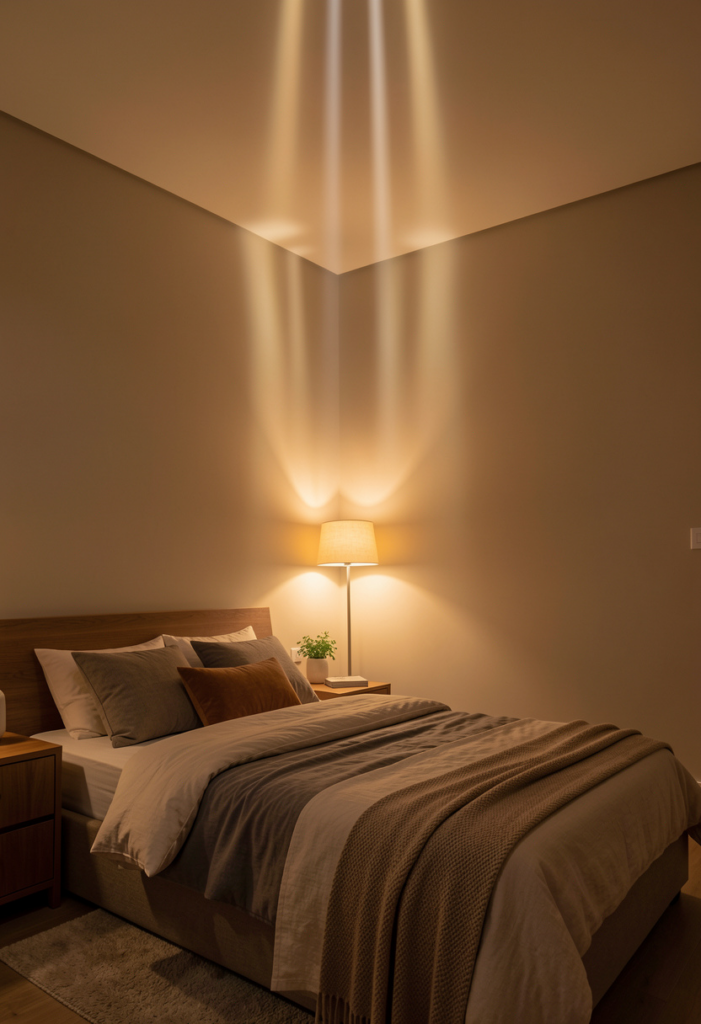
Tip:
Draw attention upward to create height perception.
Use wall sconces that shine light toward the ceiling or uplighting floor lamps in corners. Light traveling upward tricks the eye into feeling the room is taller. This technique is especially effective for bedrooms with low ceilings.
4. Ditch Dark Lampshades (Seriously)
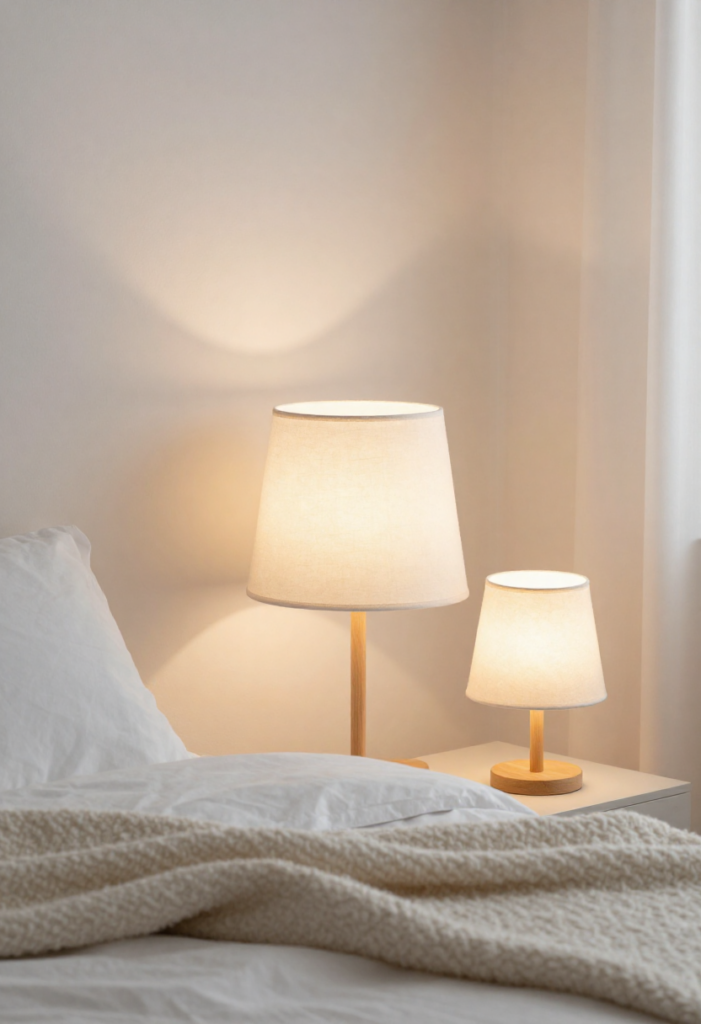
Tip:
Use white or cream-colored lampshades to maximize light diffusion.
Dark or patterned shades absorb light and make small rooms feel cramped. Lighter shades allow soft, even illumination that fills the room. For a pop of color, use pillows or wall art instead of your lampshades.
5. Embrace Smart Bulbs for Customizable Ambiance
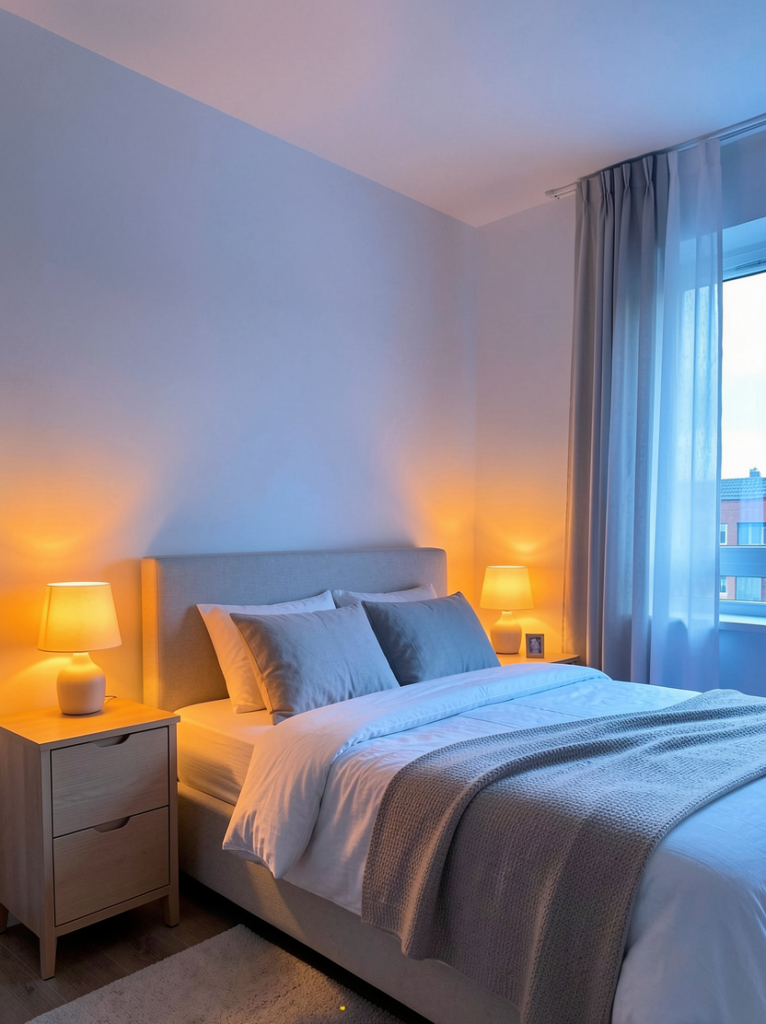
Tip:
Adjust brightness and color temperature throughout the day.
Use cooler light (around 4000K) in the morning for energy and warmer tones (2700K) in the evening for coziness. Smart bulbs also allow dimming, giving you full control over the mood.
Extra: Mimicking natural daylight patterns can also improve your sleep cycle.
6. Light Your Closet (Yes, Really)
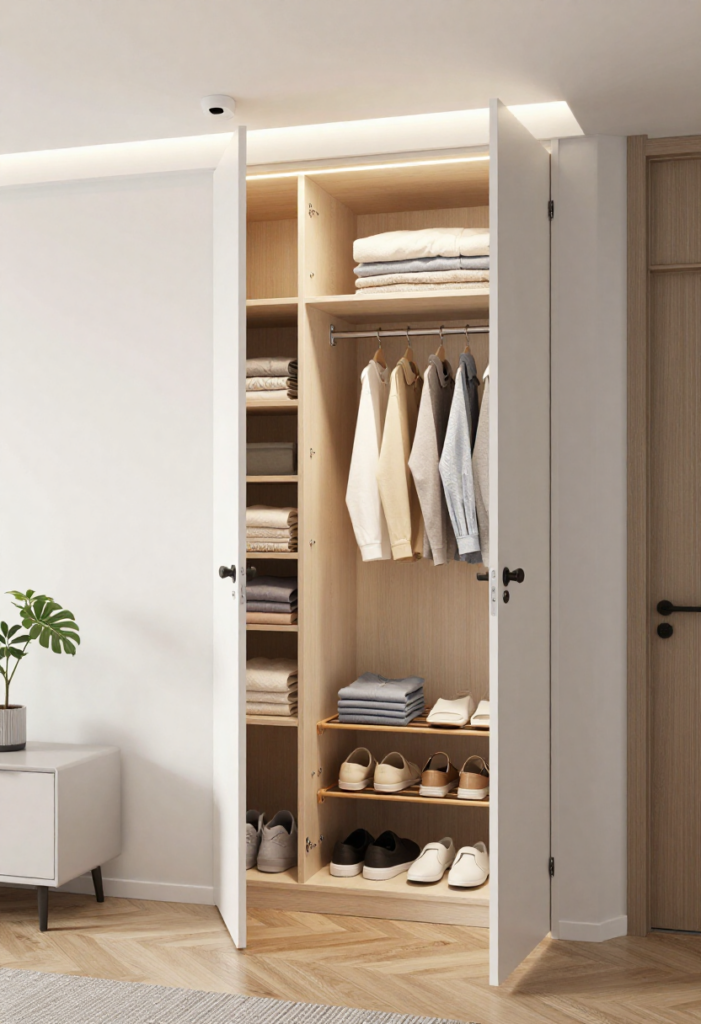
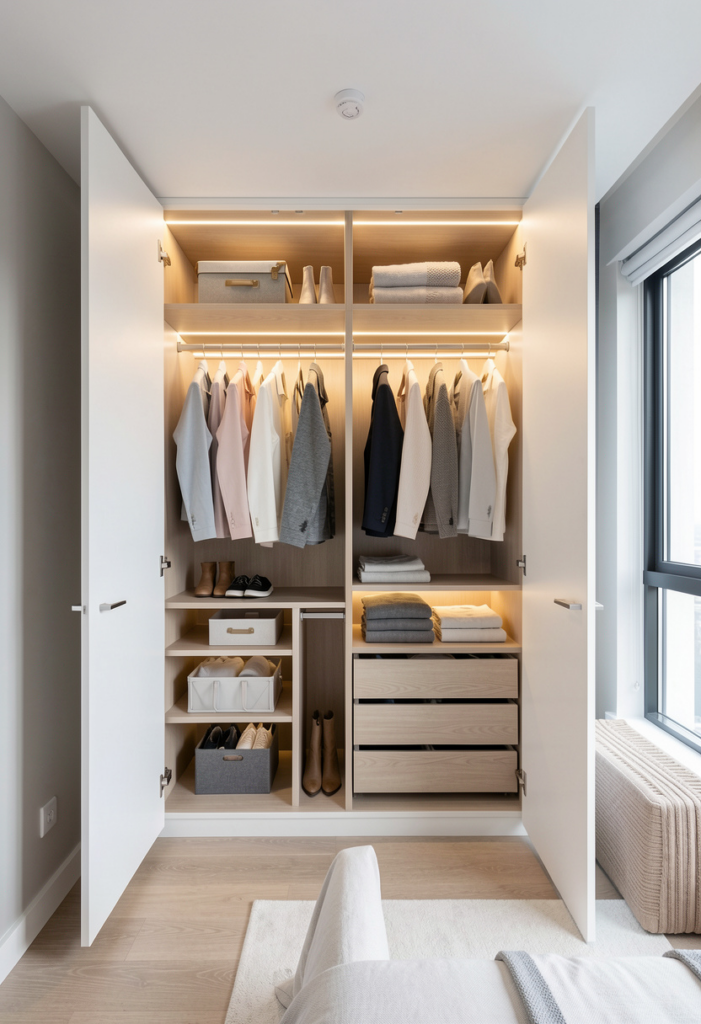
Tip:
Use motion-sensor LED strips inside closets.
A well-lit closet becomes an extension of your bedroom, tricking the eye into seeing a larger, continuous space. Battery-operated strips are perfect for renters and require no electrical work.
7. Create Focal Points with Accent Lighting
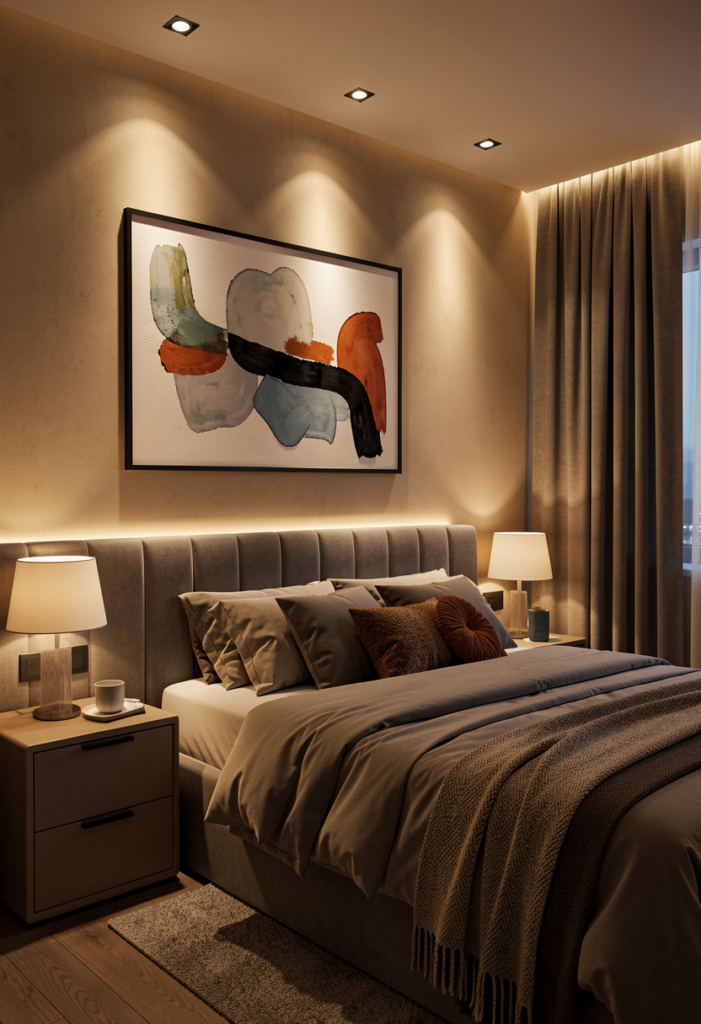
Tip: Highlight artwork, headboards, or architectural features.
Tip:
Highlight artwork, headboards, or architectural features.
Accent lighting draws attention to what you want visitors to notice, keeping the eye away from the room’s small dimensions. Use pendant lights, LED strips, or small spotlights for dramatic effect.
Extra: Limit to 1–2 focal points for a clean, curated look.